
This continuing education workshop is for mental health professionals seeking to expand their treatment toolbox.
A growing body of research underscores the efficacy of yoga in bolstering mental health treatment. This trauma-informed live virtual workshop is for therapists, yoga teachers, yoga therapists, social workers, and other caring helpers who want to bridge the gap between mental health care and embodied practice.
What you will learn
Integrating yoga into mental health recovery starts with seeing the whole person—nervous system, mind, and environment.
This isn’t about memorizing scripts or prescribing techniques. It’s about understanding how the nervous system responds to stress, how to read a client’s window of tolerance, and how to offer practices that meet them where they are—not where you think they should be.
You’ll learn practical, evidence-informed tools to help clients build interoceptive awareness (sensing what’s happening inside their body), self-compassion, and the capacity to self-soothe when distress shows up. These are not abstract concepts. They are skills that support long-term recovery and prevention—rooted in science, grounded in tradition, focused on what actually helps.
Learning Objectives
A framework for understanding common challenges – How to name what clients are experiencing without pathologizing or oversimplifying, and what to move towards to support them.
Skill building – How to teach clients the why behind the practice, not just the what.
Embodied practice – Breath, sensory, concentration, reflective, meditation, and movement tools. Organized by what the nervous system needs.
Integration – How to help clients make the tools their own, discern what fits, and carry practices into daily life.
Contraindications and adaptations – When to offer, when to adapt, and when to refer.
You will leave with the complete slide deck—a ready-to-use reference for your own practice.
Who This Workshop Is For
This course is designed for caring professionals who want to deepen their understanding of yoga for mental health through a science-informed, trauma-aware lens.
You’re in the right place if you are:
A therapist or counsellor who wants practical somatic tools to use in session
A yoga teacher or yoga therapist who wants to work safely with mental health populations
A social worker, nurse, or helper who wants trauma-informed practices for any setting
A student or new professional ready to build a foundation in embodied practices for recovery
You don’t need to be a yoga teacher. You don’t need to be a therapist. You just need to care about integrating yoga into mental health recovery in a way that is safe, ethical, science-backed, and effective.
Pricing & Dates
Live virtual workshop: June 13 & 20, 10 am – 1 pm MST
Investment: $249 CAD (until May 31) / $299 CAD after.
Includes: Two 3-hour live sessions, 30-day playback, complete slide deck, certificate of completion.
Scholarships available. Click here to apply.
Why This Approach Works
Most trainings teach you what to do. They give you a script, a sequence, a set of instructions. But when you’re sitting across from someone in distress, scripts don’t work.
Integrating yoga into mental health recovery requires something else: an understanding of the nervous system, the capacity to titrate, and the humility to know when to stay in your scope.
This course is grounded in:
Biopsychosocial model – Seeing the whole person, not just the diagnosis
Window of tolerance – Staying within or near the window, not pushing through it
Trauma-informed principles – Invitational language, choice, agency, and safety
This is not a “quick fix” training. It’s a slow, thoughtful, evidence-informed approach that helps you show up for the people you serve—without prescribing solutions, burning out or overstepping your scope.
About Your Instructor
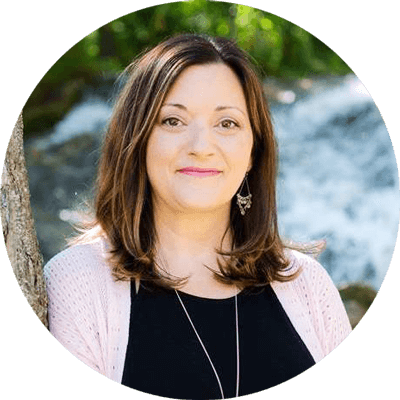
For over thirty years, Melanie Taylor has worked at the intersection of mental health and embodiment. She’s a yoga therapist (13 years), a yoga teacher trainer (13 years), and a yoga teacher for over 30 years. She’s also a former victim services advocate who has spent decades supporting people in recovery from trauma, violence, and mental health challenges.
As Director of Education for a global eating disorder recovery non-profit, she trained facilitators worldwide. She has designed somatic-embodied trainings and interventions for trauma, anxiety, depression, eating disorders, and neurodivergence. She is currently completing training to become a Licensed Professional Counsellor—because she believes deepening her own capacity to hold complexity is part of the work.
Her approach is sacred pragmatism: evidence-informed tools rooted in nervous system science. Practices that meet people where they are, titrated to their capacity and needs—supportive, not performative. All designed to help you work safely, effectively, and sustainably.
Frequently Asked Questions
Do I need to be a yoga teacher or therapist to take this workshop?
No. This workshop is designed for anyone who works with people in a helping capacity. You do not need to teach yoga or practice therapy. You need an open mind and a willingness to learn.
Will this teach me to treat mental health conditions?
No. Integrating yoga into mental health recovery is not a replacement for therapy, medical care, or medication. This workshop teaches adjunctive tools to use alongside treatment—never instead of it. We spend significant time on scope of practice, contraindications, and knowing when to refer.
Is this eligible for continuing education?
Yes. This workshop is eligible for Yoga Alliance continuing education credits. For other boards, check with your specific licensing body. We provide a certificate of completion that many accept for self-reported hours.
I’m a helper experiencing burnout. Will this help me too?
Yes. The practices in this workshop are for you as much as for the people you serve. Self-care for helping professionals is woven throughout—not as an afterthought, but as the foundation. You’ll learn to include yourself in the circle of care.
What if I can’t attend live?
Register anyway. You’ll receive the playback recording for 30 days. You can watch at your own pace and still receive the certificate.
How long do I have access?
The playback recording is available for 30 days after the live sessions. The slide deck is yours to keep.
What if I’m not ready to register?
That’s okay. Try our free workshop, Understanding Your Nervous System: Tools for Safety and Resilience. You can begin to lean in, and it gives you a sense of Melanie’s teaching style. You can also email us and let us know you would like to be notified of our next course.
I’m a helper who needs some self-care. Can this workshop help?
Yes. The practices in this workshop are for you as much as for the people you serve. Self-care for helping professionals is woven throughout—not as an afterthought, but as the foundation.
That said, self-care is not a quick fix. Burnout requires real care, not just four emails.
If you’re not ready for a full workshop, or if you want ongoing support alongside your learning, we offer a free weekly email journey called The Pot & The Cup: Self-Care for Helping Professionals. One email a week. A reflection. A question. A pause. No pressure. No performance. Just a few moments to include yourself in the circle of care.